ما الذي يجعل السوردو مختلفاً
· 1 دقائق قراءة
Sourdough is not just bread with a sour taste. It is a fundamentally different process — one that relies on wild yeast and bacteria rather than commercial yeast, and slow fermentation rather than quick rising.
What is a sourdough starter?
A sourdough starter is a live culture of wild yeast and lactic acid bacteria, made from nothing more than flour and water. At Crust, our starter has been fed daily for years.
Why does it taste different?
The lactic acid bacteria produce organic acids — primarily lactic and acetic — that give sourdough its characteristic tang. More importantly, slow fermentation breaks down gluten and phytic acid, making the bread easier to digest and its nutrients more bioavailable.
How we do it at Crust
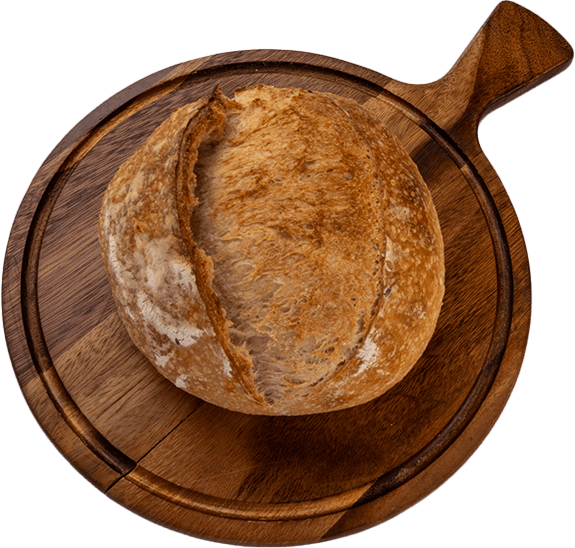
Every loaf of sourdough at Crust begins with our levain — a portion of our starter, refreshed and left to peak overnight. The dough is then mixed, shaped, and cold-fermented for 12–18 hours before baking in our deck ovens at high heat.